In an era defined by accumulation, the spaces that endure are those daring enough to remain empty. Negative space is not the absence of design — it is its most disciplined expression.
When we walk into a room and feel immediately at ease, rarely do we credit what is missing. The deliberate pause between a sofa and a window. The bare expanse of wall that makes a single object luminous. The corridor that requires three steps before revealing a view. These are not accidents of restraint — they are studied decisions, as considered as any material or finish.
The concept traces lineage to the Japanese principle of ma — an interval of space and time that carries as much meaning as what surrounds it. In traditional sukiya architecture, the tokonoma alcove is never crowded; it holds one scroll, one vessel, the weight of intentional emptiness. Western luxury design has arrived at a similar conclusion, though often by a longer road.
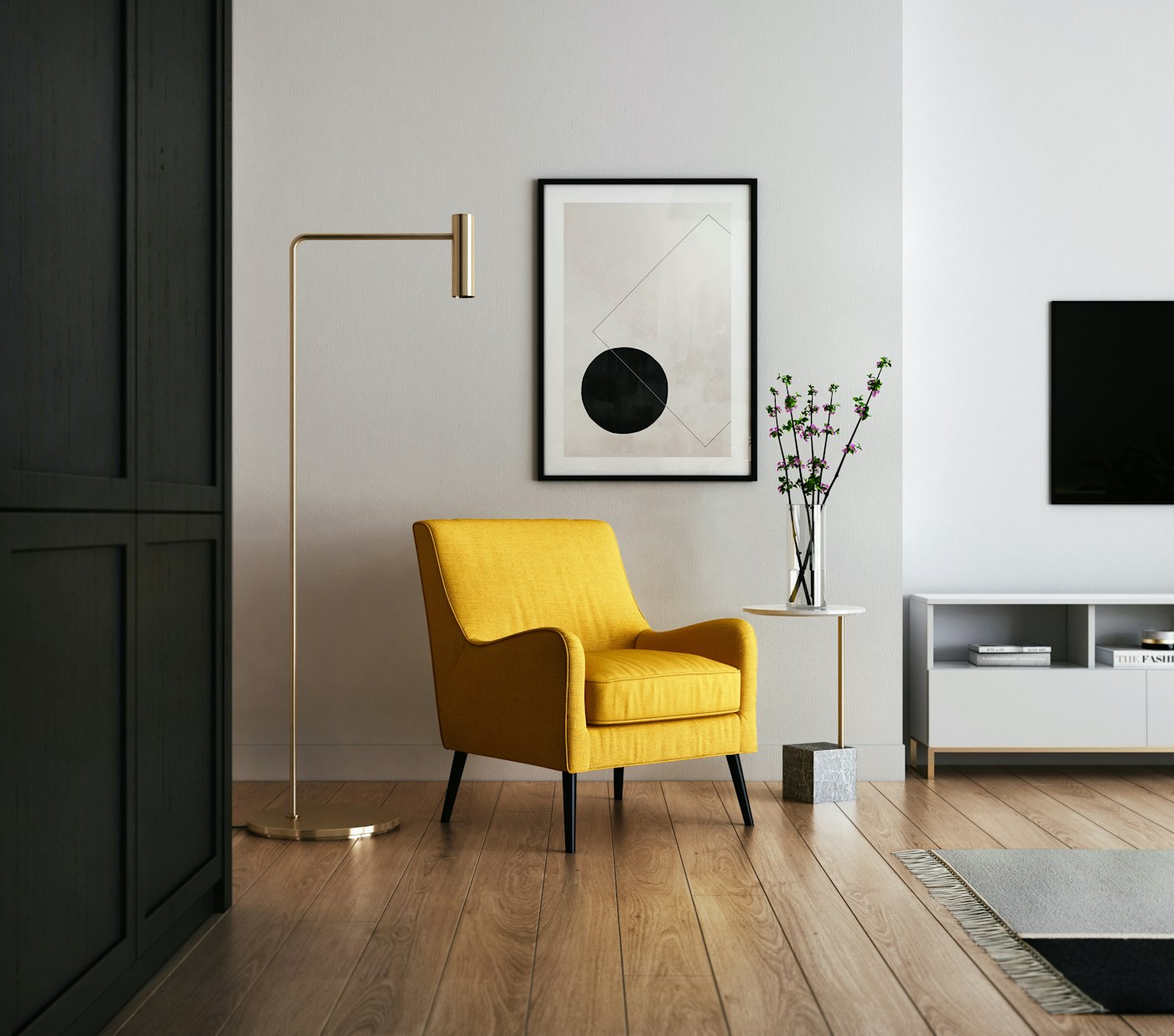
Residential project, New Delhi — Scale & Inches, 2025 ↑
Breathing room as a luxury signal
There is a paradox at the heart of high-end residential design: the most expensive rooms contain the least. A penthouse in South Mumbai or a villa in Mehrauli signals status not through density of objects, but through the audacity to leave a 4,000-square-foot living room anchored by almost nothing — a low platform sofa, a single travertine table, light arriving from three directions at once.
This calculus is deliberate. Space costs money. To leave it unoccupied is to declare that cost irrelevant — which is, in itself, the loudest possible statement. The challenge for the designer is to make that emptiness feel earned rather than incomplete, purposeful rather than unfinished. This is where the most skilled practitioners separate themselves.
The most skilled rooms speak in silences. Every surface spared from decoration becomes a surface that allows the occupant to think, to breathe, to exist without instruction.
— Priya Malhotra, Founding Principal
Consider how natural light behaves differently in a minimal room. Without competing objects, it becomes visible as a material in its own right — the slow arc of a sun stripe across polished limestone, a shadow that arrives precisely at 4pm and vanishes by five. These are the phenomenological rewards of restraint, available only when the designer has had the discipline to remove, and remove again.
The objects that survive editing
Working in negative space is fundamentally an act of editing. For every object that remains in a finished room, four have been removed. This is not a subtractive process in the reductive sense — each removal is a choice, and each choice must be justified against the room's central argument. What is this space trying to feel like? What is it asking of the person who inhabits it?
The objects that survive this edit share certain qualities. They carry visual weight without physical bulk. They reward close attention — a grain, a seam, a slight asymmetry that reveals the hand of a maker. They do not announce themselves; they wait to be noticed. In a spare room, every surviving piece becomes charged with significance. The vase on the ledge is no longer decoration — it is the room's character, distilled.
There is a moment in every project where we reach what I call the edit threshold — the point at which removing one more object would tip the room from serene into barren. Learning to sense that threshold, and stop precisely there, is the practitioner's central skill. It cannot be taught from books. It comes from inhabiting rooms, from watching how people move through space, from understanding the difference between comfort and stimulation.
The rooms we return to in memory are rarely those that dazzled us with abundance. They are the ones that offered us something rarer: the permission to be still. In that sense, designing with negative space is ultimately an act of hospitality — a gift of clarity, made possible only by the courage to leave well enough alone.